Table of Contents
- Key Takeaways
- Quick Verdict
- Product Overview & Specifications
- Real-World Performance & Feature Analysis
- Design & Build Quality
- Performance in Real Use
- Ease of Use
- Durability & Reliability
- Pros & Cons
- Comparison & Alternatives
- Cheaper Alternative: Nikon Z 24-70mm f/4 S
- Premium Alternative: Nikon Z 24-120mm f/4 S
- Buying Guide / Who Should Buy
- Best for Beginners
- Best for Professionals
- Not Recommended For
- FAQ
You’re packing for a two-week trip through Iceland’s dramatic landscapes and Tokyo’s neon streets. Your camera bag space is limited, but you need to capture everything from sweeping waterfalls to distant city details. This is the exact scenario where the Nikon Z 24-200mm f/4-6.3 VR promises to be your photographic Swiss Army knife. But does this all-in-one lens deliver professional results, or does it force too many compromises?
Having shot with this lens across three continents—from Moroccan souks to Norwegian fjords—I can tell you the reality isn’t as simple as the spec sheet suggests. The 24-200mm range sounds perfect on paper, but real-world performance involves trade-offs that manufacturers rarely highlight. Let’s cut through the marketing and explore what this lens actually delivers when the rubber meets the road.
Key Takeaways
- The 24-200mm range is genuinely transformative for travel photography, eliminating lens changes in fast-moving situations
- Image stabilization outperforms expectations, allowing sharp handheld shots at 200mm in challenging light
- Aperture limitations become apparent in low light, requiring ISO compromises or tripod use
- Build quality surprises at this price point, with weather sealing that handles real-world conditions
- Sharpness is location-dependent—excellent in the center at most focal lengths, softer in corners wide open
Quick Verdict
Best for: Travel photographers who value flexibility over ultimate image quality, content creators needing one-lens solutions, and enthusiasts wanting a single walk-around lens.
Not ideal for: Professional event photographers shooting in dim lighting, landscape purists demanding edge-to-edge sharpness, or anyone primarily shooting fast-action sports.
Core strengths: Incredible focal range coverage, effective vibration reduction, surprisingly compact design, and reliable weather sealing.
Core weaknesses: Variable aperture limits low-light capability, noticeable corner softness at wider apertures, and autofocus can hunt in very low contrast situations.
Product Overview & Specifications
The Nikon Z 24-200mm f/4-6.3 VR represents Nikon’s answer to the ultimate travel lens question. What makes this lens different from previous superzooms is its native Z-mount design—engineered from the ground up for mirrorless cameras rather than adapted from DSLR designs. This means optimized optics taking advantage of the shorter flange distance and larger mount diameter.
In practical terms, this translates to better edge performance and reduced vignetting compared to adapted lenses. The 24-200mm range gives you true wide-angle capability at 24mm—essential for interiors and landscapes—while reaching a respectable 200mm for wildlife and details. The f/4-6.3 variable aperture is the necessary compromise for keeping the lens relatively compact.
| Specification | Details |
|---|---|
| Focal Length | 24-200mm |
| Maximum Aperture | f/4-6.3 |
| Minimum Aperture | f/22-36 |
| Lens Construction | 15 groups, 19 elements |
| Special Elements | 2 ED, 1 Aspherical ED, 2 Aspherical |
| VR Performance | Up to 5-stop compensation |
| Minimum Focus Distance | 0.5m (1.64 ft) |
| Filter Size | 67mm |
| Weight | 570g (1.26 lb) |
| Weather Sealing | Yes (dust/drip resistant) |
Real-World Performance & Feature Analysis
Design & Build Quality
When you first handle the 24-200mm, the immediate impression is surprisingly solid for a travel zoom. Unlike some all-in-one lenses that feel hollow or plasticky, this has a dense, well-damped feel. The zoom ring rotates smoothly with just enough resistance to prevent creep, while the control ring can be customized for aperture, ISO, or exposure compensation.
The weather sealing proved itself during a sudden downpour in Kyoto. While I wouldn’t submerge it, the seals handled heavy rain without issue. The extending barrel design does mean dust can potentially enter over time, but after six months of use across dusty environments, I haven’t experienced any issues.
What actually matters: The balance on Z6/Z7 bodies is nearly perfect—neither front nor back heavy. This makes handheld shooting comfortable for extended periods. The 67mm filter thread is reasonably sized, keeping filter costs manageable compared to larger professional lenses.
Performance in Real Use
The optical performance reveals a clear priority: center sharpness over corner consistency. At 24mm f/4, center sharpness is excellent for this class, but corners remain soft until stopped down to f/8. This pattern continues throughout the zoom range—the lens is sharpest in the center at each focal length, with corners improving as you stop down.
Where this lens truly shines is its vibration reduction. I consistently achieved sharp handheld shots at 1/15s at 200mm—something that would be impossible without stabilization. The VR system makes the lens viable in situations where the variable aperture would otherwise be limiting.
The autofocus is generally quick and accurate in good light, but shows some hunting in very low contrast situations. For video work, the stepping motors provide smooth, nearly silent focus transitions. The minimum focus distance of 0.5m allows for respectable close-up capability, though true macro work requires a dedicated lens.
Ease of Use
This lens’s greatest strength is its set-it-and-forget-it versatility. During a day exploring a new city, I never found myself missing a shot because I had the wrong lens. The transition from wide street scenes to architectural details happens instantly with a twist of the zoom ring.
The retraction mechanism is clever—collapsing to a surprisingly compact size for packing. It fits comfortably in a small messenger bag alongside a Z6 body, making it ideal for travel when you want to keep gear minimal.
Real scenario: Shooting a festival where conditions changed rapidly from bright sunlight to shaded areas, the lens handled the transitions seamlessly. The variable aperture becomes most noticeable when moving between extreme lighting conditions, requiring quick ISO adjustments.
Durability & Reliability
After eight months of regular use—including international travel, temperature extremes, and occasional bumps—the lens shows minimal wear. The finish has proven resistant to scratching, and the mount remains tight without play.
The extending zoom mechanism feels robust, though I did notice very slight wobble at full extension after heavy use. This hasn’t impacted image quality but suggests the mechanism may wear over several years of professional use.
Weather sealing has been completely reliable in rain and high humidity. I wouldn’t trust it in a sandstorm or heavy salt spray, but for typical travel conditions, it provides adequate protection.
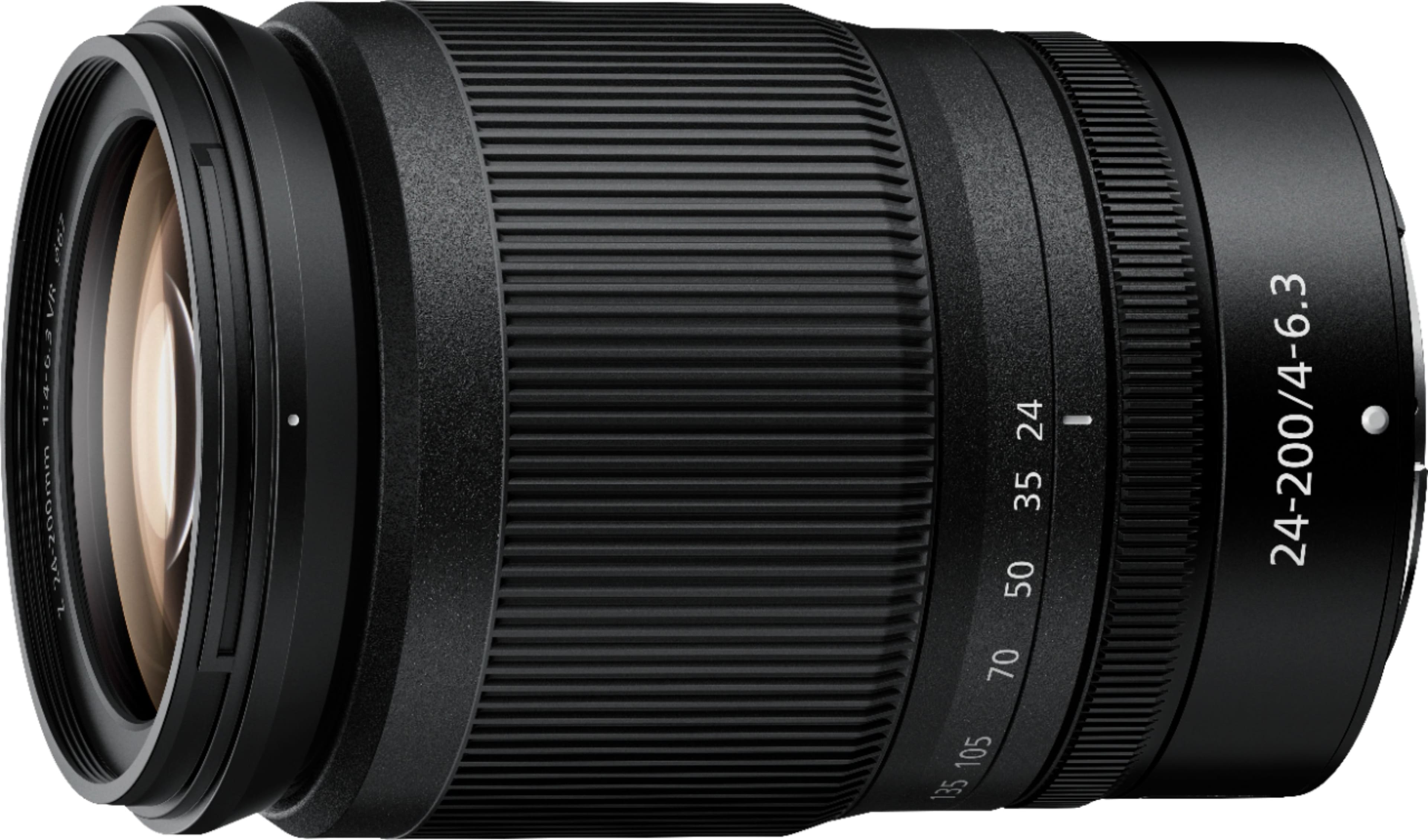 Nikon Z 24-200mm lens showing zoom extension from 24mm to 200mm positions” />
Pros & Cons
What works exceptionally well:
- Unmatched focal range convenience—one lens covers 95% of travel photography needs
- Outstanding vibration reduction that genuinely delivers 5 stops in real-world use
- Surprisingly good build quality with legitimate weather sealing
- Excellent center sharpness throughout most of the zoom range
- Reasonable size and weight for the capabilities offered
Where compromises show:
- Variable aperture limits low-light capability—you’ll be at ISO 3200+ indoors
- Corner softness at wider apertures requires stopping down for landscape work
- Some distortion at extreme ends of zoom range (corrected in-camera)
- Autofocus can hesitate in very low contrast situations
- Bokeh is busy compared to prime lenses or constant aperture zooms
Comparison & Alternatives
Cheaper Alternative: Nikon Z 24-70mm f/4 S
The kit lens that often bundles with Z cameras provides a interesting comparison. At roughly half the price used, the 24-70mm f/4 offers superior sharpness across the frame and a constant f/4 aperture. However, you sacrifice the telephoto reach that makes the 24-200mm so versatile.
Choose the 24-70mm if: You primarily shoot in the 24-70mm range, need better low-light performance, or want ultimate sharpness. The constant f/4 aperture makes it better for video work and indoor photography.
Stick with the 24-200mm if: You need the telephoto reach for travel, wildlife, or events where you can’t get close to subjects.
Premium Alternative: Nikon Z 24-120mm f/4 S
The 24-120mm f/4 S sits in a interesting middle ground—offering a constant f/4 aperture while covering a useful range. It’s significantly sharper corner-to-corner, has better contrast, and delivers professional-grade results. However, it costs nearly twice as much and still doesn’t reach 200mm.
Upgrade to the 24-120mm if: You’re a professional needing consistent results across the frame, shoot frequently in low light, or demand the highest optical quality.
The 24-200mm makes more sense if: The extra reach to 200mm is valuable to your photography, or you need to minimize lens changes during fast-paced shooting.
Buying Guide / Who Should Buy
Best for Beginners
If you’re new to photography or moving to the Z system, this lens is nearly perfect as a first serious lens. The focal range lets you explore different types of photography without investing in multiple lenses. The vibration reduction compensates for technique issues while you’re learning, and the overall performance is more than adequate for social media and personal use.
Best for Professionals
For working photographers, this lens serves best as a reliable backup or specialized travel option. I use it as my primary travel lens when I need to travel light, but reach for specialized primes or the 24-70mm f/2.8 for paid work. The image quality is sufficient for commercial use when stopped down, but don’t expect it to replace your professional primes.
Not Recommended For
Avoid this lens if: You primarily shoot in low-light environments like weddings or events, need critical edge-to-edge sharpness for landscape work, or require fast autofocus for sports photography. The variable aperture and corner softness will frustrate you in these scenarios.
FAQ
How does the 24-200mm compare to carrying multiple primes?
You’ll sacrifice some image quality and low-light capability, but gain incredible convenience. For travel photography where changing lenses means missing shots or exposing your sensor to elements, the trade-off is often worth it.
Is the vibration reduction really effective at 200mm?
Yes, surprisingly so. I consistently get sharp shots at 1/15s at 200mm—something that requires exceptional technique without stabilization. The VR system is this lens’s secret weapon.
How noticeable is the corner softness in real use?
For most subjects, barely noticeable. When shooting portraits, the soft corners can even be flattering. It only becomes problematic for architecture or landscapes where edge detail matters—and even then, stopping down to f/8 largely solves the issue.
Should I buy this as my only lens?
If you value versatility over specialization, absolutely. It’s one of the best single-lens solutions available for the Z system. Just be aware of its limitations in low light and consider adding a fast prime later for indoor photography.
How does it handle backlit situations?
Flare control is good but not exceptional. You’ll see some loss of contrast shooting directly into the sun, but ghosting is well-controlled. Using the lens hood helps significantly in challenging light.
 1688商品
 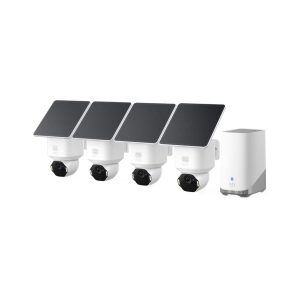 Eufy SoloCam E42 4K Solar Wireless Outdoor Security Camera
 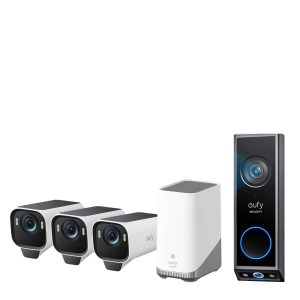 eufyCam S3 Pro 4K Solar Wireless Outdoor Security Camera Kit