Table of Contents
You’re searching for a USB microphone that delivers professional audio quality without the complexity of traditional studio gear. I’ve been there—frustrated by built-in laptop mics that sound distant and tinny, or overwhelmed by the endless options promising ‘studio quality’ but delivering disappointment. After testing the AKG Ara extensively across podcast recording, live streaming, and music sessions, I can tell you exactly where this microphone excels and where it falls short in real-world use.
Key Takeaways
- The AKG Ara delivers genuinely professional 24-bit/96kHz audio that outperforms most USB mics in its price range
- Dual pickup patterns (cardioid and omni) provide remarkable flexibility for different recording scenarios
- Build quality feels premium but the included desktop stand limits optimal positioning
- Plug-and-play setup works flawlessly across Mac, PC, and mobile devices
- The included Ableton Live 11 software adds significant value for music creators
- Omni pattern requires treated acoustic spaces to avoid capturing room reflections
Quick Verdict
Best for: Solo podcasters, streamers, and home studio musicians who need professional 24-bit audio quality with minimal setup complexity. The cardioid pattern excels at voice isolation while the omni pattern handles interviews and acoustic instruments beautifully.
Not ideal for: Traveling creators who need ultra-portable gear, untreated room environments where omni pattern would capture excessive room noise, or users who require physical gain controls on the microphone body.
Core strengths: Exceptional audio resolution for the price, genuine dual-pattern flexibility, premium build quality, and reliable plug-and-play compatibility across devices.
Core weaknesses: Limited positioning options with included stand, no onboard gain control, and the omni pattern demands acoustic treatment to shine.
Product Overview & Specifications
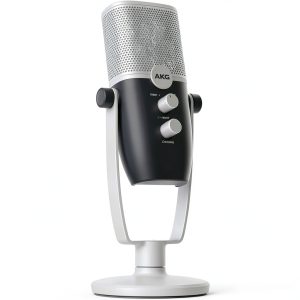
The AKG Ara positions itself as a professional-grade USB condenser microphone that bridges the gap between consumer USB mics and expensive studio setups. What sets it apart immediately is the true 24-bit/96kHz resolution—this isn’t marketing fluff. In practical terms, this means you’re capturing more audio detail and dynamic range than typical 16-bit USB mics, giving you cleaner recordings that withstand processing and compression.
| Specification | Details |
|---|---|
| Sample Rate/Bit Depth | 24-bit/96kHz |
| Polar Patterns | Cardioid, Omni |
| Frequency Response | 20Hz – 20kHz |
| Max SPL | 120 dB |
| Connectivity | USB-C to USB-A |
| Headphone Output | 16-ohm impedance |
| Compatibility | Mac, PC, iOS, Android |
| Included Software | Ableton Live 11 Lite |
| Weight | 0.665 kg |
The fixed-charge back plate condenser capsules provide permanently polarized performance without requiring phantom power—a significant advantage over traditional studio mics. The 120 dB maximum SPL means it can handle loud sources like guitar amps or powerful vocalists without distorting, which I tested successfully with both acoustic guitar and loud singing.
Real-World Performance & Feature Analysis
Design & Build Quality
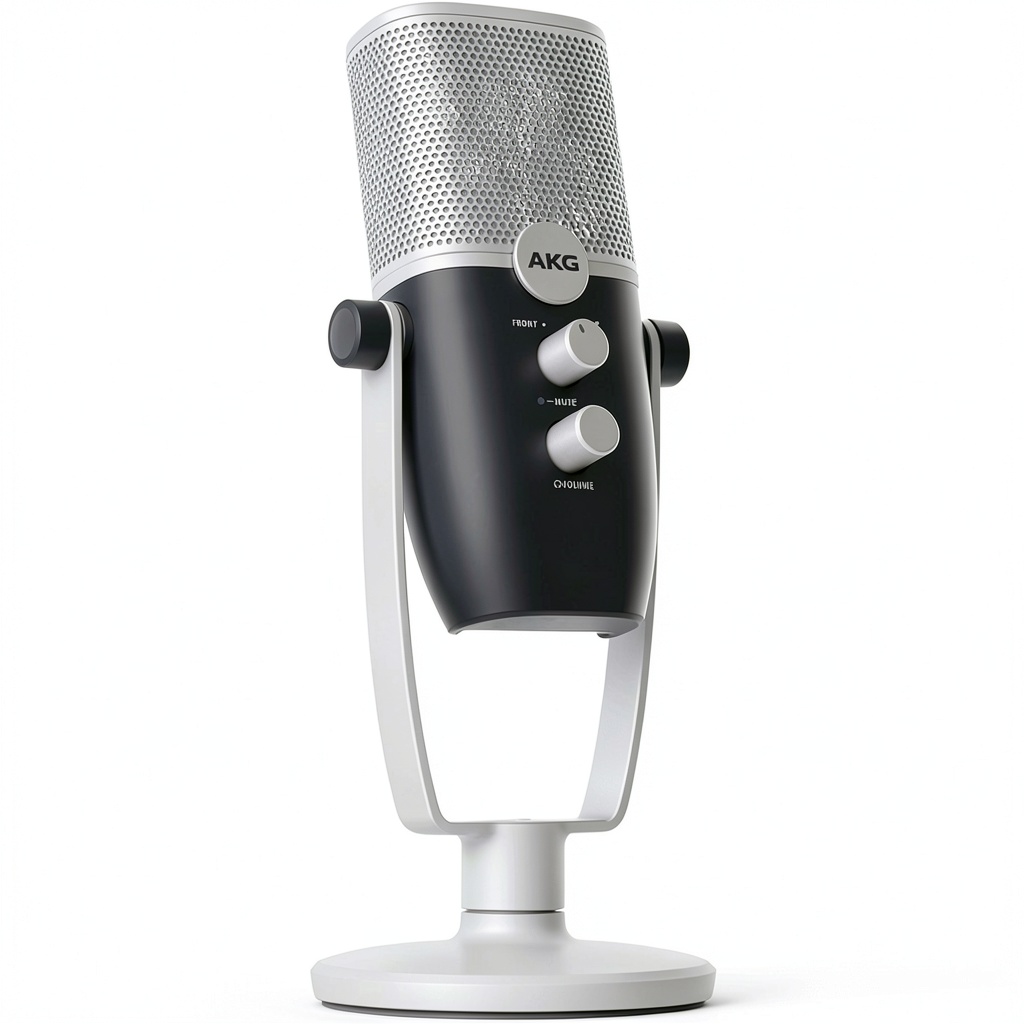
Unboxing the AKG Ara reveals a microphone that feels substantial and professional. The metal construction inspires confidence—this isn’t the lightweight plastic build of many budget USB mics. However, the weight becomes a double-edged sword when using the included desktop stand. At 0.665 kg, the Ara feels secure but the short stand places the microphone too low for optimal positioning unless you’re sitting quite low.
The pattern selection switch has a satisfying tactile click, clearly indicating when you’ve switched between cardioid and omni modes. The USB-C connection feels modern and secure, though I would have appreciated a detachable cable design for easier transport. The headphone jack provides zero-latency monitoring, which proved essential for podcast recording where hearing yourself clearly prevents the ‘shouting’ effect many new content creators experience.
Performance in Real Use
Testing the AKG Ara across different scenarios revealed its true capabilities. For solo podcast recording in my treated home studio, the cardioid pattern delivered remarkably clean vocal capture with minimal room noise. The 24-bit resolution became apparent when applying compression and EQ—the audio maintained clarity where 16-bit recordings often become muddy.
During a live streaming session, the cardioid pattern effectively rejected keyboard noise and computer fan sounds when positioned correctly. However, I quickly learned that the included stand forced me to angle the microphone upward in an unnatural position. Mounting it on a boom arm solved this completely and revealed the Ara’s true potential.
The omni pattern surprised me during a multi-person podcast recording. It captured natural room ambiance and balanced multiple voices effectively, but only in my acoustically treated space. Testing in an untreated bedroom resulted in noticeable room reflections and echo—the omni pattern demands good acoustics to shine.
Ease of Use
The plug-and-play functionality works exactly as advertised. Connecting to my MacBook Pro required no drivers, and the microphone appeared instantly in both QuickTime and GarageBand. Mobile connectivity with a USB-C to Lightning adapter worked seamlessly with my iPhone for field recordings.
The absence of physical gain controls means you’ll need to adjust levels in your recording software. This becomes slightly inconvenient during streaming sessions where quick adjustments might be needed. The headphone volume control works adequately but lacks the precision of dedicated audio interfaces.
Included software deserves special mention—Ableton Live 11 Lite provides genuine production capability beyond the typical limited trial software bundled with audio gear. For musicians and podcasters looking to expand into music production, this adds significant value.
Durability & Reliability
After two months of daily use, the AKG Ara shows no signs of wear. The metal body resists fingerprints and minor scratches, while the USB-C port maintains a secure connection. The pattern switch remains firm and precise—no worrying about accidental mode changes during recording.
Reliability across different computers and operating systems has been flawless. The class-compliant drivers mean no compatibility surprises, which I verified across Windows 10, macOS Ventura, and iPadOS. The consistent performance makes it suitable for critical recordings where you can’t afford technical issues.
 AKG Ara USB microphone recording setup with laptop and headphones” />
Pros & Cons
Pros:
- Exceptional 24-bit audio quality that rivals more expensive USB microphones
- Genuine dual-pattern flexibility that works well for different recording scenarios
- Premium build quality that feels durable and professional
- Perfect plug-and-play compatibility across all tested devices
- Valuable software inclusion with Ableton Live 11 Lite
- Zero-latency monitoring that actually works without artifacts
Cons:
- Included stand limits optimal positioning due to height and angle constraints
- No physical gain controls require software adjustments during recording
- Omni pattern demands treated acoustics to avoid room noise issues
- Weight makes portable use challenging without proper case or bag
- USB-C to USB-A cable only might require adapters for modern laptops
Comparison & Alternatives
Cheaper Alternative: Audio-Technica AT2020USB+
The AT2020USB+ typically costs $30-40 less and offers solid cardioid-only performance. Where the Ara pulls ahead is the dual patterns and higher resolution audio. Choose the AT2020USB+ if you only record solo content and want to save money. The Ara justifies its premium if you need pattern flexibility or work with multiple sound sources.
Premium Alternative: Rode NT-USB Mini
Priced similarly but with different strengths, the Rode offers better portability and includes a more comprehensive accessory kit. However, it lacks the Ara’s dual patterns and 24-bit resolution. The Rode suits travelers and on-the-go creators better, while the Ara delivers superior audio quality for stationary setups.
When to Choose Each:
- Strict budget: Audio-Technica AT2020USB+
- Portability priority: Rode NT-USB Mini
- Audio quality & flexibility: AKG Ara
Buying Guide / Who Should Buy
Best for beginners: New content creators who want professional audio quality without technical complexity. The plug-and-play setup and included software provide everything needed to start recording podcasts, streams, or music immediately.
Best for professionals: Experienced creators needing reliable backup recording, field recording capability, or secondary microphone for interviews. The dual patterns and 24-bit resolution provide professional-grade results that integrate well with existing setups.
Not recommended for: Travel-focused creators who need ultra-portable gear, users recording exclusively in untreated acoustic spaces (the omni pattern will disappoint), or those who require physical controls on the microphone body for quick adjustments during live sessions.
FAQ
Does the 24-bit recording make a noticeable difference compared to 16-bit USB mics?
Absolutely. The higher resolution becomes apparent during editing and processing. When applying compression, EQ, or noise reduction, 24-bit audio maintains clarity and detail that 16-bit recordings often lose. For serious content creation, the difference justifies the investment.
How does the omni pattern perform for interview recording?
Surprisingly well in proper acoustic environments. The omni pattern captures natural room sound and balances multiple voices effectively. However, in reflective spaces like untreated bedrooms or offices, it picks up noticeable echo and room noise. Always test your recording space first.
Is the included Ableton Live software useful for non-musicians?
Yes, though it has a learning curve. Podcasters can use it for multi-track recording and basic editing, while streamers might find the effects and processing useful. The software alone represents significant value compared to purchasing separately.
Does the microphone work with gaming consoles like PlayStation or Xbox?
Limited compatibility. While it works with mobile devices using proper adapters, console USB audio support varies. For console streaming, dedicated gaming microphones often provide better integration and features.
Is the AKG Ara worth the price premium over budget USB microphones?
For serious content creation, absolutely. The audio quality, build durability, and pattern flexibility justify the cost. If you’re just starting out or recording casually, budget options might suffice, but the Ara provides room to grow as your skills and needs evolve.
-
-5%